
Everyday goods prices rose 2.7%. Here's how to check your grocery budget.
AI illustration Everyday goods prices rose 2.7%. Here's how to check your grocery budget. Prices for everyday household purchases were 2.7%…
Nov 12, 20262 min read
Prices for everyday household purchases were 2.7% higher in October 2026 than a year earlier, according to Numerator's latest Consumer Goods Price Index. The research company also measured a 0.6% increase from September to October. Its index reflects what participating households actually paid for products, including purchases after discounts, rather than a promise about the price at any one grocery store.
The longer view explains why a single sale might not feel like much relief. Numerator estimates that prices in the goods it tracks are 34.8% higher than in January 2018. In its October consumer sentiment research, 42.2% of respondents named rising prices as their top concern for the year ahead. That finding comes from Numerator's survey, not from every household in the country.
There is another important distinction: Numerator's everyday-goods index is not the same as the federal grocery inflation measure. The Bureau of Labor Statistics reported that prices for food bought for the home increased 0.4% in October. Each measure uses a different basket and method, so the percentages should not be treated as interchangeable.
What to do before the next grocery run:
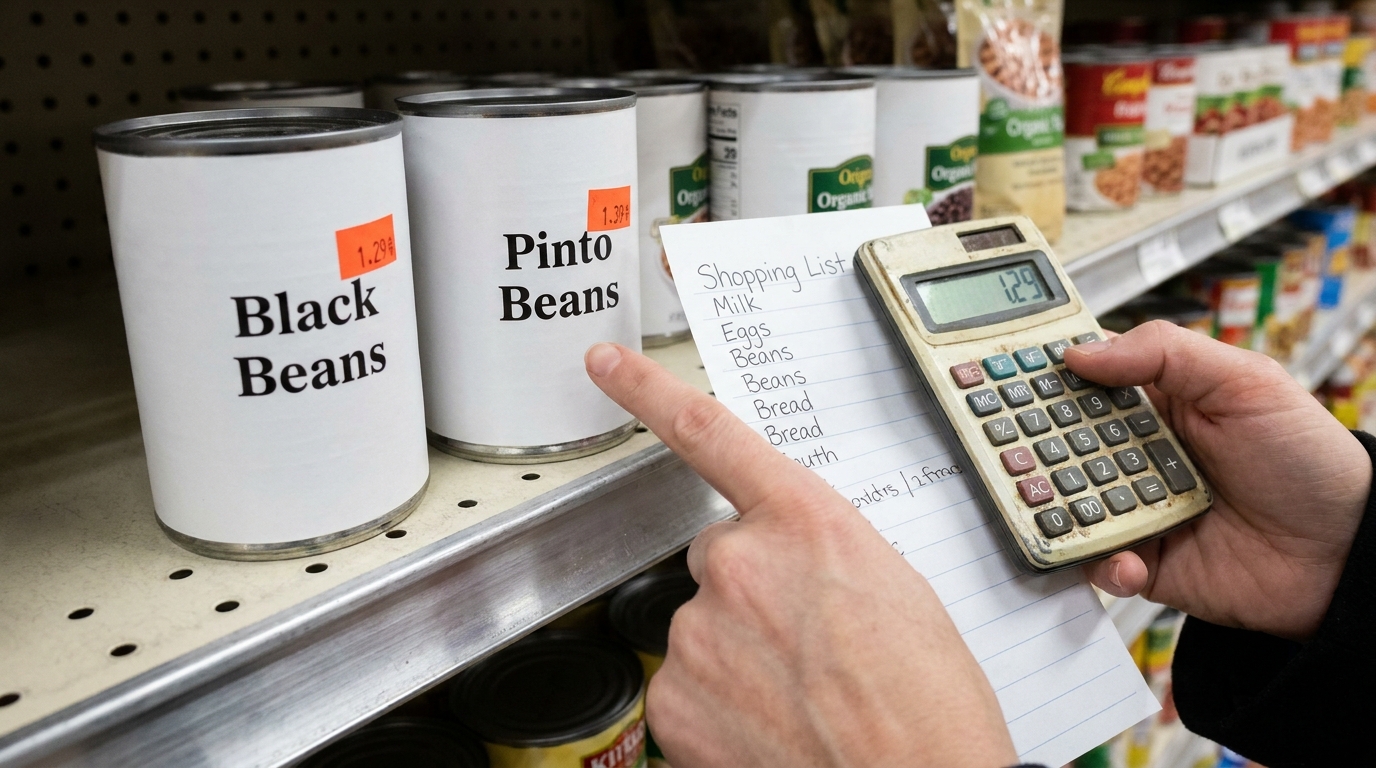
Make a repeat-purchase list. Write down eight to ten groceries you buy frequently, including the package sizes, so a price comparison is meaningful.
Set the limit first. Separate essential groceries from optional extras, then plan meals around the money left after your must-have items.
Check the price per unit. A package on promotion can still cost more per ounce than an alternative. Compare equivalent sizes and avoid buying extras simply to qualify for a discount.
Verify the store. A national inflation statistic does not establish what is in stock or what you will pay locally. Check retailer-level information where supported and confirm the checkout total.
You can begin with Shop My Budget on Youdle and build your list around your actual spending target. The tool starts with your budget; it does not guarantee a retailer's checkout price.
Shopper takeaway: The best response to a broad price increase is a specific basket check: same products, same sizes, realistic weekly budget and verified local offers.
Sources: Numerator's November 9, 2026 Consumer Goods Price Index report; U.S. Bureau of Labor Statistics, October CPI.