
Grocery Budget
Grocery Prices in October 2026: What's Cheaper, What's Rising, and Why Your Bill Still Feels High
Grocery prices dipped in the latest inflation report, but some everyday staples are still getting more expensive. Here's what's changing and…
Oct 23, 20267 min read
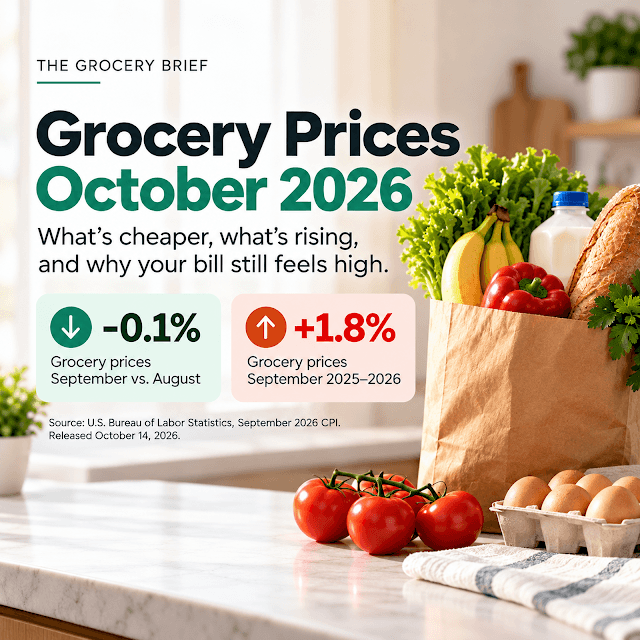
Grocery prices went down in September. Yes, really.
According to the latest government inflation report, grocery prices fell 0.1% from August to September. But before you celebrate, there's a catch: groceries still cost 1.8% more than they did a year ago.
And not everything got cheaper. Milk and beef prices fell, while produce and soft drinks became more expensive.
So if your grocery bill still feels high, the numbers may actually help explain why.
Here's what's getting cheaper, what's costing more, and what matters for your next grocery trip.
Grocery prices at a glance: October 2026 update
The latest figures from the U.S. Bureau of Labor Statistics, released October 14, show how grocery prices changed in September 2026.
These are national price-index changes, not the exact price differences shoppers will see at individual stores.
The takeaway: Grocery prices fell slightly overall, but what got cheaper depends on which aisles you shop most often.
What's getting cheaper at the grocery store?
Some welcome price declines appeared in September's numbers.
Milk prices fell 2.0%, contributing to a 0.9% decline across dairy products. Beef prices dropped 1.0%, while the broader category of meat, poultry, fish and eggs declined 0.5%.
Other food-at-home products, a category covering several pantry staples and prepared foods, also edged down 0.2%.
For shoppers who regularly purchase these products, the declines could offer some relief.
But here's an important distinction: a product becoming cheaper than it was last month doesn't necessarily mean it's inexpensive.
One month of lower prices won't automatically undo previous increases. And even within categories that are declining nationally, shoppers may find different prices depending on the store, brand or package size.
That's why comparing what you're paying today with what you usually spend is often more useful than relying on a national average alone.
What's getting more expensive?
Other aisles moved in the opposite direction.
Nonalcoholic beverages increased 0.9% in September, including a 1.5% jump in carbonated drinks.
Fruits and vegetables rose 0.5%, while cereals and bakery products increased a modest 0.1%.
Those changes might seem small, but their impact depends on what's in your cart.
A family that regularly buys fresh produce, bread and beverages could see its bill increase even during a month when overall grocery prices decline.
That's the part of inflation reports we think deserves more attention: the national average doesn't shop for your household. You do.
Are groceries actually cheaper than last year?
Not overall.
Grocery prices are still 1.8% higher than they were in September 2025.
And several categories have increased even more.
Produce and beverages are among the categories experiencing the larger annual increases.
Dairy is a notable exception, with prices 0.7% lower than a year earlier.
The difference between monthly and annual changes is worth remembering. A grocery item can get cheaper this month and still cost more than it did last year.
For a household that shops every week, those changes can accumulate across dozens of purchases.
Why your grocery bill might not match the inflation report
Imagine two households shopping in the same supermarket.
One frequently buys milk, beef and eggs. The other purchases more fresh produce, sparkling drinks and bakery products.
They may shop at the same store during the same week and leave with very different impressions of whether grocery prices are improving.
Neither experience is necessarily wrong.
The Consumer Price Index measures changes across a broad selection of food categories. It doesn't follow your exact shopping list.
And it doesn't account for every change you make at checkout, such as choosing a different brand, stocking up during a sale or buying a larger package.
This is why we believe grocery affordability deserves a more personal conversation.
The question isn't simply whether grocery prices are rising or falling nationally. It's whether your household can buy what it needs within the budget it has.
Four things worth doing before your next grocery trip
A single inflation report shouldn't require you to rethink how your family eats. But knowing which prices are moving can help you make better shopping decisions.
1. Know the prices of your regular purchases
Start with five to ten products you buy almost every week.
You don't need a complicated spreadsheet. Just having a general idea of what milk, eggs, bread, chicken or other household staples usually cost can help you recognize a worthwhile deal.
2. Compare the total cost of your shopping list
A supermarket might have the lowest advertised price on one item but charge more for everything else.
Look at the full basket, especially when deciding whether another store is worth the trip.
And remember to compare unit prices. A lower package price doesn't always mean you're getting more for your money.
3. Be flexible where it makes sense
If one ingredient is unusually expensive, consider whether a comparable alternative works for your household.
Frozen produce, different cuts of meat or another brand might offer better value.
But don't buy something simply because it's on sale. A bargain only saves money if you actually use it.
4. Plan around your budget, not the promotions
Store advertisements are designed to get your attention. Your shopping list should reflect what you need.
Set a reasonable spending target before you shop, build your list around meals and essentials, and leave some flexibility for worthwhile deals.
Make your next grocery trip easier with Youdle
You don't have to figure it all out in the grocery aisle.
Use Youdle to explore grocery shopping tools, organize what you need and plan your next grocery run around your budget.
A little planning before you leave can make the trip easier once you're there.
Plan your grocery run with Youdle →
What we're watching in November
September brought a small decline in overall grocery prices, but we're not ready to call it a lasting trend.
The next inflation report will help show whether grocery prices continued moving lower in October or started climbing again.
We'll also be watching three things:
Whether milk and dairy prices continue providing relief.
Whether produce and beverage prices keep rising.
Whether the overall grocery price index moves meaningfully lower compared with last year.
One month of data isn't enough to tell us where grocery prices are headed.
And for shoppers, the changes that matter most will continue to depend on the groceries they buy regularly.
The bottom line
Grocery prices fell slightly in September, but they're still higher than they were a year ago.
Some shoppers may be finding better prices on milk, beef and other essentials. Others are paying more for produce, beverages and everyday pantry items.
Both experiences can be true.
At The Grocery Brief, we believe grocery news should do more than report whether prices are up or down. It should help you understand what's changing, what deserves your attention and what you can actually do with that information.
Because a national inflation rate is one thing.
Getting everything on your grocery list without going over budget is another.
Grocery prices change. We'll help you keep up.
Every month, we break down what's changing at the grocery store, what's worth paying attention to and what the latest numbers mean for everyday shoppers.
Get The Grocery Brief in your inbox for grocery price updates, important recalls, shopping news and useful finds.
Subscribe to The Grocery Brief. Free, useful grocery news delivered to your inbox.
Your turn: What's getting more expensive in your cart?
Have you noticed prices changing at your grocery store? Is there something you used to buy regularly that's no longer worth the price?
Join the Youdle Community to share what you're seeing and learn from other shoppers across the country.
Grocery Price Watch: Follow the series
Grocery Price Watch is The Grocery Brief's monthly look at food prices affecting American households. Follow the series for national data, price trends and practical shopping insights.
Previously: Grocery Prices in September 2026
More grocery news: Explore The Grocery Brief
Source: U.S. Bureau of Labor Statistics, Consumer Price Index, September 2026 , released October 14, 2026.
Monthly percentage changes are seasonally adjusted where applicable. Year-over-year comparisons are not seasonally adjusted.